top of page

Trust is not abstract. It can be engineered.

AI Regional-Centric Systems

Operational Frameworks to AI Advance.

OECD Competition Open Day 2026 — Editorial Insight: 
AI Regional-Centric Systems 
Access the Core Signal to AI Advance

Regional-Centric Systems - Applied:


Three key factors:

>> Psychocultural sovereignty

>> State-aligned language interaction

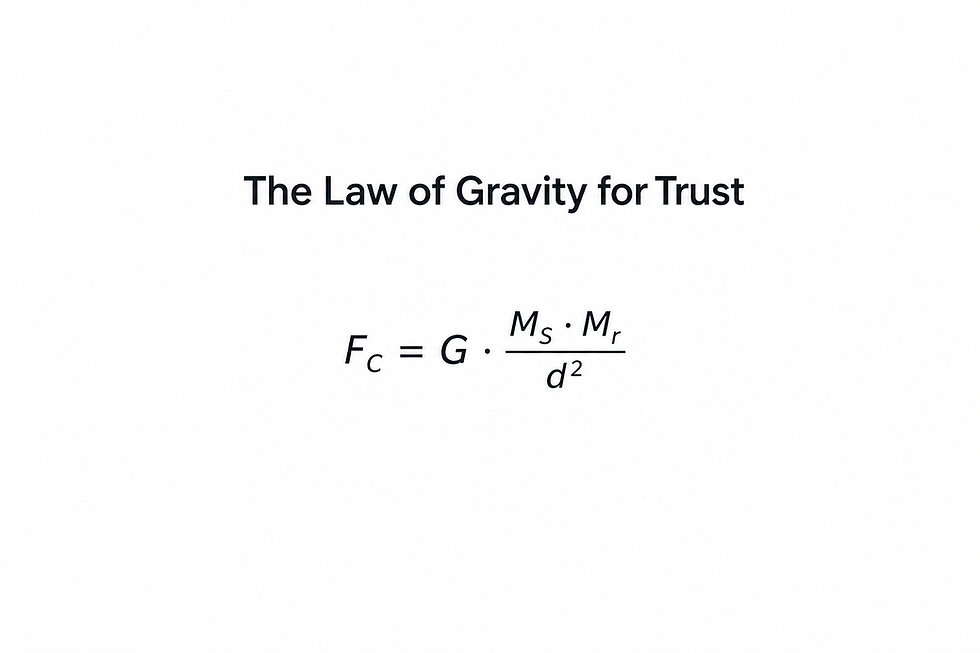
>> Trust as an engineered outcome (T = f(C, S, R | context))


Interpretation and interaction are shaped within your specific regulatory, cultural, and operational environment — not only what is said, but what is actually understood.

Achieving operational coherence between technology, cognition, and cultural sovereignty.

ViSP-Lab is in motion. Alignment is the next intelligence ▶︎

Welcome to the cyber Tower of Babel in our AI-driven societies

ViSP-Lab_Wanice Alfes_ThinkMETA Keynotes.png

SAME WORD. Different trust mechanisms.

What does the same sentence mean across each culture?

  • EN: How do I know that you are sincere?

  • DE: Woher weiß ich, dass du aufrichtig bist?

  • PT: Como eu posso saber se você é sincero?

ViSP-Lab Translation: 


  • EN: TRUST grows through consistency, actions, and personal development.

  • DE: TRUST needs clear rules and reliable structures, preventing hidden behavior.

  • PT: TRUST comes from enhanced relational proximity.

ViSP-Lab operates on human-AI designs using cognitive engineering.
We build frameworks that respect cultural sovereignty clusters.

ViSP-Lab Research & Development provides foundational support for a responsible AI.

Advancing human intelligence through trust engineering and regional AI interaction design.


>>bias reduction, dissociations, and offloading contexts.

We co-desing modal interactions with organizations by applying the METAP4-Method and the AI ​​Regional-Centric System.


The Lab  functions as Die Brücke:

>>It bridges German precision, Brazilian scalability, Swiss innovation, and U.S. knowledge transfer to enable ethical, data-driven pilot programmes replicable under EU-GDPR frameworks.

Pilot programmes are available for qualifying organizations.

ViSP-Lab collaborates with organizations ready to move from AI deployment risk to operational trust. Where the real friction is not technological capability, but meaning alignment across cultural and generational contexts — in regulatory compliance, cross-regional deployment, and workforce AI adoption.

ThinkMETA Keynotes and Training 

From academic and applied research, six organizational critical factors for growth under complex change were identified.These are delivered through the: ThinkMETA Keynotes and Training— supporting decision-makers in perception shifts, workforce adaptation, and human-AI design. 

Scientific Lead Wanice Alfes


Cyberpsychologist  of communication (FHWien, Vienna) and global health specialist (Harvard University), with research in human-AI cognitive engineering focused on AI Regional-Centric Systems. Trained at Oxford in executive innovation, at MIT in analytics, design & prototypes, and HCI-modal interactions/UX - User Interface systems.


At Harvard — ViSP-Lab was conceived and received faculty endorsement. Her work has been recognized with accolades at both MIT and Harvard.


Alfes has also developed the METAP4-Method for metacognitive models. She specializes in trust engineering for organizations navigating cross-regional deployment, regulatory compliance, and workforce AI adoption.


Founder of ViSP-Lab Research and Development. Born in Rio de Janeiro, Wanice Alfes lives in Bad Homburg, Germany. See Person

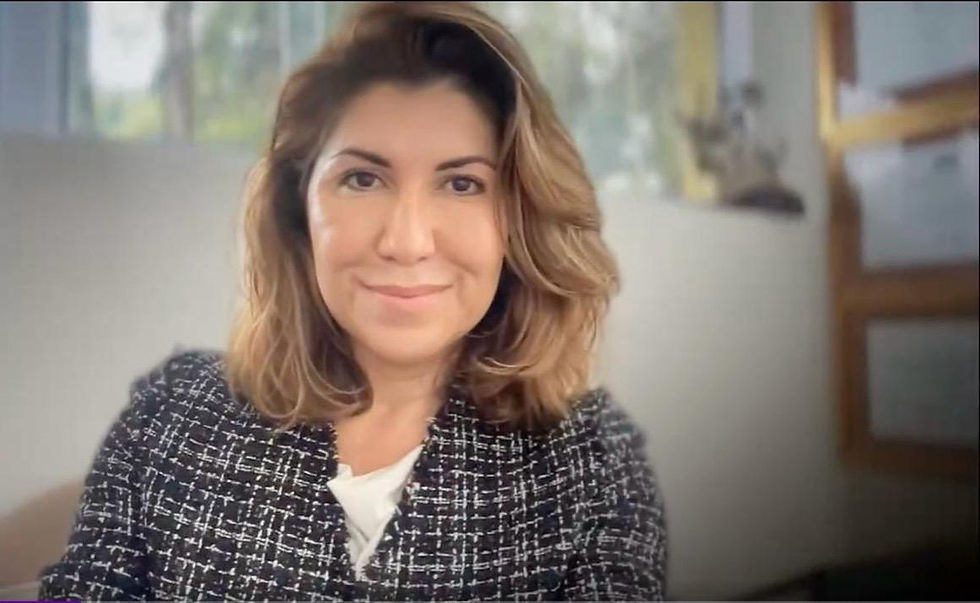
Wanice Alfes, cyberpsychologist and founder of ViSP-Lab Human-AI Cognitive Engineering.
bottom of page